Vitae International Researcher Development Conference 2026 #VitaeCon2026
In-person: Tuesday 8 – Wednesday 9 September 2026, Dynamic Earth, Edinburgh
Online: Thursday 1 October 2026
Examining what works in researcher career support, the in-person element of the conference brings together evidence, practice and perspectives from across sectors to explore questions about effectiveness and investment. As researcher development has evolved over three decades, we know more about what works in career transition support, building capability across sectors and creating cultures that enable researchers to flourish.
The in-person element will be accompanied by a pre-conference workshop on Monday 7 September 2026, also at Dynamic Earth, Edinburgh. Places will be limited to 30 – bookings for this will open soon.
The online element of #VitaeCon2026 will take place on Thursday 1 October 2026, and will be free for Vitae members. We will extend the conversation, with the online element a chance to celebrate the innovation and emerging practice across the international researcher development community.
Why attend?

Insightful speakers
Network with peers
Be the first to hear of sector developments
Contribute to discussions and insights
Agenda
N1: Networking – Skillfluence
→ Tue 8 September 2026
→ 08:50 to 09:20 GMT
→ Room – Blue
TBC
N2: New to Vitae
→ Tue 8 September 2026
→ 09:00 to 09:20 GMT
→ Room – Ozone
First time at a Vitae conference?
Join us at the ‘New to Vitae’ session
What is it?
In this informal session, members of the Vitae team will present on what Vitae do, and members of the community will host an ICE breaker activity to kick start the conference networking.
You will learn about:
- How Vitae can support you in your role, and how you can make the most of your
institutional membership - The Vitae Researcher Development Framework 2025
- Our upcoming events and plans for 2026-2027
Visit the Vitae Zone on the event platform for the latest updates and reports from Vitae.
Keynote – Earning public trust in research and higher education: why investment in people matters
→ Tue 8 September 2026
→ 09:30 to 10:15 GMT
→ Room – Green
Room Green.
Higher education and research are operating in an increasingly complex political, economic and social environment. As governments look to research and innovation to drive productivity, growth and societal benefit, universities and research organisations face growing expectations to demonstrate their value and maintain public trust. In this keynote, Alicia will explore how public attitudes towards higher education and research are evolving, the wider policy and political context shaping the sector, and why investment in people remains fundamental to delivering long-term impact. Drawing on recent evidence and sector insights, she will examine how research, innovation and talent development can work together to strengthen the relationship between research and society, and what this means for institutions, funders and the researcher development community.
This keynote will be followed by an extended audience Q&A.
D3: Beyond the Tools: The Capabilities Researchers Need for GenAI
→ Tue 8 September 2026
→ 10:10 to 23:10 GMT
→ Room – Ozone
Room Ozone.
This interactive session will move beyond a focus on GenAI tools to explore the capabilities researchers need to work effectively, critically, and responsibly with AI across the research lifecycle. Participants will consider where and how GenAI is already being used in research practice, from developing ideas and reviewing literature through to analysis, writing, and dissemination. Through discussion and practical activities, the session will identify the skills and behaviours that become more important in an AI-enabled research environment. The session will support colleagues working with researchers to think about how they can frame support about GenAI in ways that are developmental, responsible, and grounded in broader researcher capability. Insights from the session will also help inform Vitae’s approach to AI resource development.
A4: Mapping the Technical Workforce: A Cross-Institutional Approach to Strengthening Technical Careers
→ Tue 8 September 2026
→ 10:25 to 11:25 GMT
→ Room – Salisbury
Room Salisbury.
Technical staff are a vital, yet often overlooked, part of the Higher Education workforce; facing persistent challenges around visibility, recognition, career development and workforce sustainability. This interactive workshop explores how coordinated institutional strategies, linking the Technician Commitment, Researcher Concordat and Research Culture Action Plans, can create meaningful, long-term improvements for technical professionals.
Participants will be introduced to the work of the UK Institute for Technical Skills and Strategy (UK ITSS), including its sector wide Career Pathways Action Group, which brought together 27 institutions to address key issues in talent management, professional development, career pathways and workforce planning. A central focus is the cross institutional workforce mapping project, which produced a practical toolkit enabling institutions to map, understand and develop their technical workforce.
Through short presentations and discussion, attendees will gain practical strategies and tools to help them implement or support workforce mapping withing their own organisations.
A2: PGR Career Development in the UK: What works, what matters, what next
→ Tue 8 September 2026
→ 10:25 to 11:25 GMT
→ Room – Blue
Room Blue.
The need for effective, inclusive, practice-informed career development for postgraduate research (PGR) students is vital at they embark on a breadth of career pathways. This session shares insights from a recent UKRI-commissioned UK-wide study exploring PGRs experiences, perceptions and engagement with career development, alongside perspectives from stakeholders across the research ecosystem. Barriers to career development and opportunities for targeted interventions will be highlighted.
Alongside presenting these insights, this interactive session will encourage discussion and practice sharing based on selected study data. This approach ensures that the voices of the PGRs and stakeholders whose participation informed the research remain central. Seven interconnected recommendations emerging from the study will be presented to stimulate further conversation and action.
Participants will gain:
• Evidence-based insights into PGR attitudes, behaviours and experiences of career development
• Examples of effective and emerging practice from across the UK sector
• Facilitated discussion to generate practical ideas for enhancing provision.
A1: Leading AI practice in research groups: A freely available framework for researcher developers
→ Tue 8 September 2026
→ 10:25 to 11:25 GMT
→ Room – Green
Room Green.
AI use in research groups is no longer emergent: it is present, uneven and largely ungoverned. For researcher developers, this creates a specific challenge: how do you support research leaders to govern something that is already happening, in the absence of consistent institutional or funder guidance?
This workshop introduces a freely available, CC-BY licensed training toolkit developed for UKRI Future Leaders Fellows and now available to the wider researcher development community. The toolkit, delivered through a sequenced set of resources: a leadership guide, hands-on worksheets, an AI planning canvas and a prompt library template, was designed to move research leaders from passive awareness to active governance of AI practice within their groups.
In the first part of the session, we will share the evidence base and design decisions behind the resource, including the pressing needs voiced by research leaders: acting without complete guidance, managing accountability across a research team and establishing documentation practices that can withstand scrutiny.
In the second part, participants will work through one resource component in small groups and discuss how it could be adapted or deployed within their own institutional context, including a reflection on how to use it in our own professional activities and teams.
Participants will leave with access to the full resource package and a practical sense of how it could be used within their own programmes and practice.
A5: Ask Vitae – the RDF Planner 2025
→ Tue 8 September 2026
→ 10:25 to 11:25 GMT
→ Room – Hutton
Room Hutton.
Curious about the refreshed RDF Planner?
Join us for this informal session to explore the refreshed RDF Planner and see how it could support your work with researchers.
You can see the Planner from a user perspective, ask practical questions about access, navigation and potential use, and take part in an informal Q&A about what has changed, how the new Planner works, and what support may be available. Whether you are already familiar with the RDF Planner or simply curious to find out more, you are welcome to drop in, have a look around and share any questions or feedback.
A3: Seven steps to equity for disabled doctoral students
→ Tue 8 September 2026
→ 10:25 to 11:25 GMT
→ Room – Ozone
Room Ozone.
Disabled doctoral students bring enormous expertise, insight and innovation to research, but less than half of disabled doctoral students in UK institutions agree that their institution provides the reasonable adjustments they need for equitable access to study. Unsurprisingly, these students also report lower overall satisfaction with their studies (PRES 2025).
In this interactive presentation we will first share findings and recommendations from a collaborative report produced by The Open University and Disabled Students UK, which sets out a roadmap for improving these students’ experiences across the UK HE sector.
The report, 7 Steps to Equity for Disabled Doctoral Students, draws on our research on the lived experiences of disabled researchers and doctoral supervisors. It highlights persistent structural challenges, including inconsistent access to adjustments, unclear support pathways, and a lack of disability-inclusive research cultures.
The report makes clear that the barriers faced by disabled doctoral students are not inevitable- they are structural, and therefore changeable. In this presentation we will share insights from the two research projects that led to this report and highlight actionable ways for universities to create research cultures where disabled scholars are not only included but fully supported to thrive.
After briefly outlining our findings and recommendations, participants will take part in an interactive workshop during which they will have the opportunity to reflect on and discuss implications for their own contexts and practices. Participants will work in groups, using anonymised quotations from disabled PGRs and supervisors to identify points in the doctoral journey where institutional environments can introduce barriers or facilitate success. Together we will explore practical actions that individuals and institutions can take to implement the recommendations in their own context and foster more inclusive and supportive doctoral journeys.
This session aims to move beyond awareness-raising towards collective reflection and action, empowering participants to develop role-specific strategies for supporting disabled PGRs and contributing towards more equitable and inclusive research cultures.
B3: Researcher Development in Practice: Enhancing Supervision, Well Being, and Performance Through Research Culture Change
→ Tue 8 September 2026
→ 11:50 to 12:20 GMT
→ Room – Ozone
Room Ozone.
Supporting researcher development requires moving beyond individual resilience to transforming the research environments in which researchers learn, work, and lead. Yet academic cultures often continue to reward high workloads, constant availability, and sustained productivity, creating tensions between excellence, well-being, and effective supervision. This session presents Université Laval’s initiative to strengthen researcher development by transforming research culture and supervision practices within research teams and laboratories.
Drawing on a participatory pilot project conducted with graduate students and faculty members, the session will explore how institutions can move beyond individual resilience approaches to address structural factors that shape researchers’ experiences. Participants will learn about the evidence gathered through focus groups, the key challenges identified—including workload pressures, supervision practices, and team dynamics—and the development of an integrated framework centred on three dimensions: sustainable work practices and well-being, healthy and collaborative research teams, and high-quality research supervision.
The session will showcase practical actions implemented at Université Laval, including awareness-raising initiatives, community engagement activities, supervisor support resources, and tools designed to foster shared expectations, communication, and inclusive leadership within research teams. It will also examine lessons learned from implementation, highlighting both enablers and barriers to institutional change and discussing strategies for balancing research excellence with healthy research practices. Participants will be invited to discuss transferable strategies and institutional levers that support researcher development through research culture change, contributing to the broader conversation on what works in building sustainable, high-performing research environments.
By participating in this session, attendees will gain practical, evidence-informed strategies to enhance researcher development through research culture change. They will leave with concrete ideas, transferable practices, and institutional levers that can be adapted to their own contexts to support sustainable, inclusive, and high-performing research environments.
B1: Twenty-five years after What Do PhDs Do?: has the evidence changed minds?
→ Tue 8 September 2026
→ 11:50 to 00:20 GMT
→ Room – Green
Room Green.
It is 25 years since What Do PhDs Do? first challenged the myth that a PhD is a pathway to academia and nowhere else. Through What Do PhDs Do?, What Do Researchers Do? and the many reports and initiatives that followed, CRAC-Vitae and others across the sector have helped build an evidence base demonstrating the broad value of doctoral education across the labour market.
Yet we still encounter doctoral researchers and supervisors who hold onto the view that those who leave academia are deviating from expectation. If the evidence is now well established, why do these assumptions persist?
In this lively discussion, Sara Shinton, Charlie Ball and Robin Mellors-Bourne reflect on the origins and legacy of What Do PhDs Do?, what has changed over the last quarter century, and what still needs to change. They will consider whether the challenge has shifted from generating evidence to accepting what that evidence tells us, whilst also reflecting on the impact the work continues to have on their own careers and professional practice.
B2: Understanding Barriers and Building Better Careers in Energy Research
→ Tue 8 September 2026
→ 11:50 to 12:20 GMT
→ Room – Blue
Room Blue.
This session presents findings from a qualitative study exploring barriers to career progression and what works in researcher career support across the energy and net zero research sector. Drawing on interviews with PhD students, early-career researchers, academics, and researchers who have transitioned into industry, it examines how funding models, institutional structures, mentoring, and labour market conditions shape career pathways. The session highlights three key themes: the benefits of structured doctoral training, particularly Centres for Doctoral Training (CDTs); the need for career development from the earliest stages of research careers; and the influence of informal networks and mentorship on access to opportunities and career progression. Participants will gain evidence-based insights into where current support falls short and how institutions can create more equitable and sustainable researcher careers. Practical recommendations will focus on embedding career development, formalising mentoring and networking, and strengthening links between academia and industry, with lessons applicable across disciplines.
B4: Doctoral Futures: A pilot programme integrating coaching, careers education, and peer support for arts & humanities researchers at King’s College London
→ Tue 8 September 2026
→ 11:50 to 12:20 GMT
→ Room – Sailsbury
Room Sailsbury.
Sometimes no matter how good the careers provision for researchers is at an institution, there will be groups whose specific challenges and needs can’t be meaningfully addressed by the general support offered. The career and employability barriers being faced by Arts & Humanities researchers are growing, and support for them needs to not just surface skills and broaden horizons but also allow for reflection on values and identity and it needs to happen in community, not isolation.
This session shares Doctoral Futures, an eight-week hybrid programme combining group coaching, peer support and traditional careers education for A&H researchers exploring careers beyond academia. Laura will present the programme design, some of the activities and digital tools used, as well as the challenges encountered and participant feedback.
You’ll leave with a practical overview, ideas for adapting something similar in your own institution, and considerations for running group-based interventions more broadly.
C2: Using Improvisation to Develop Active Listening, Co-Creative Practice and Inclusive Communication in Research Supervision
→ Tue 8 September 2026
→ 13:30 to 14:30 GMT
→ Room – Blue
C4: From Knowing to Doing: A Training Model That Gets Researchers into Real Career Conversations
→ Tue 8 September 2026
→ 13:30 to 14:30 GMT
→ Room – Salisbury
Room Salisbury.
Talking to people can be a good way to explore career options. However, once early career researchers are convinced of this, usually nothing happens. This is a typical knowing-doing gap, that keeps “informational interviews” perpetually recommended and rarely attempted. At the German Cancer Research Center, we built a training to close that gap: Targeted Career Orientation – Practising Informational Interviews. Participants do not just plan future conversations. They arrive with real interviews already scheduled and spend two hands-on days talking to Alumni. Beforehand, they use our Alumni platform as well as CareerCheck.eu, a free online tool that helps researchers translate their skills, interests and values into a concrete orientation focus and information to prepare for these conversations. What happens when researchers who found networking intimidating join and just do it? We share the programme design, pilot learnings, and a transferable, low-resource model any institution can adopt.
C3: Beyond the Prompt: Combining AI and Thinking Environment Approaches in Researcher Career Development
→ Tue 8 September 2026
→ 13:30 to 14:30 GMT
→ Room – Ozone
Room Ozone.
Artificial intelligence is becoming an increasingly common feature of researcher career development, but where does it genuinely add value, and where is human expertise indispensable?
This interactive workshop introduces Thinking Environment principles as a framework for critically exploring the role of AI in researcher development and career conversations. Through practical activities, participants will experience how attention, listening and independent thinking can strengthen AI-supported career exploration. They will explore how AI can help researchers identify transferable skills, recognise strengths and investigate career options, while evaluating outputs, refining prompts and discussing the benefits and limitations of AI for career reflection.
Participants are invited to contribute useful AI prompts and tools to a shared Padlet, creating a resource for all. They will leave with adaptable prompts, practical facilitation techniques and greater confidence in integrating AI into researcher development in ways that are reflective and centred on the needs of researchers.
C1: From Fellow to Leader: Learning from the University of Liverpool Fellows Development Programme
→ Tue 8 September 2026
→ 13:30 to 14:30 GMT
→ Room – Green
Room Green.
What does it take to support a research fellow through one of the most pivotal transitions in an academic career, from funded researcher to independent leader? This session will share multi-year evidence from the University of Liverpool Fellows Development Programme to explore what effective, structured development for this career transition looks like in practice, and its impact.
Designed specifically for research fellows, the University of Liverpool Fellows Development Programme combines skills workshops, peer learning, community building, and group coaching to support researchers to develop a leadership identity, successfully manage projects and lead teams, and build a competitive funding portfolio. This programme was designed to cover the different levels of learning: Cognitive, Experiential, Reflective, and Behavioural, while also recognising the importance of community building to ensure a sustainable network of peer-led support.
In this session, participants will explore evidence of the programme’s impact across multiple years, and what these data say about which elements of the programme drive change. Participants will also have opportunities for peer-led discussion to enable the sharing of best-practice.
By attending this session, participants will gain:
– Evidence-informed insight into what a structured, multi-component development programme can achieve for research fellows
– A practical framework for designing or refining researcher development provision at their own institution, drawing on lessons from the University of Liverpool Fellows Development Programme across multiple cohorts
– Lessons learnt and practical ideas shared from the researcher development community.
C5: What Does Effective Research Leadership Look Like?
→ Tue 8 September 2026
→ 13:30 to 14:30 GMT
→ Room – Hutton
Room Hutton.
This session invites delegates to help shape the development of a refreshed Vitae RDF Lens, focused on the skills and behaviours that are developed or acquired through, research leadership. Co-led by Vitae and the Leadership Community of Practice, convened by Manchester Metropolitan University and Oxford University, the session will draw on sector expertise to explore what effective research leadership looks like in contemporary research environments. Participants will explore the skills, behaviours and attributes that matter most, including in self-leadership, leading others, and setting the vision and strategy needed to build enabling, supportive and responsible research cultures. The outputs will inform the development of the Vitae RDF lens, helping to ensure it is credible and practical for researchers, researcher developers and institutions supporting research leadership.
Panel: What makes career transitions work? Evidence and experience from across pathways
→ Tue 8 September 2026
→ 14:50 to 16:15 GMT
→ Room – Green
Room Green.
This panel explores what underpins successful career transitions across different career pathways, examining the individual, relational and structural factors that influence positive outcomes. It focuses on transferable lessons for supporting researchers and others through transition points.
Keynote speakers
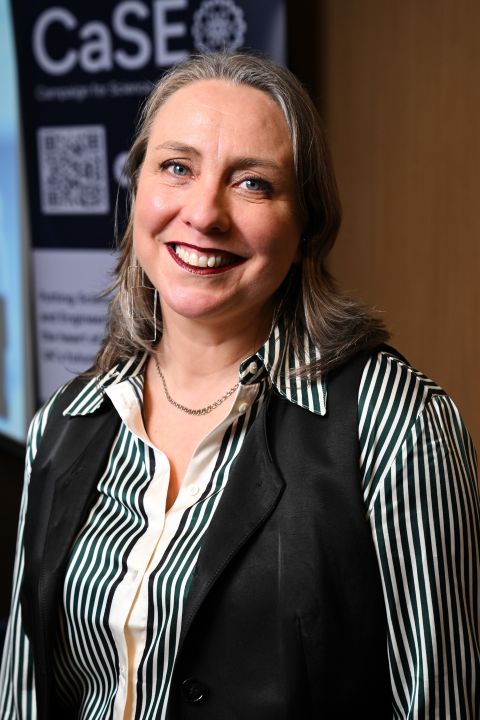
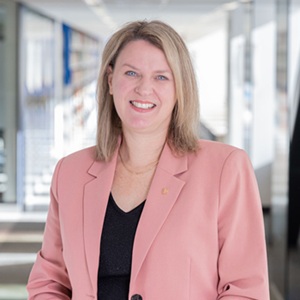
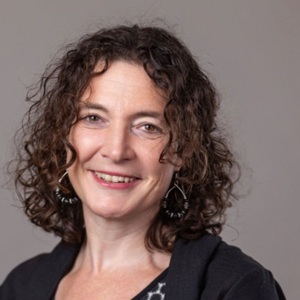
Executive Director of Campaign for Science and Engineering (CaSE)
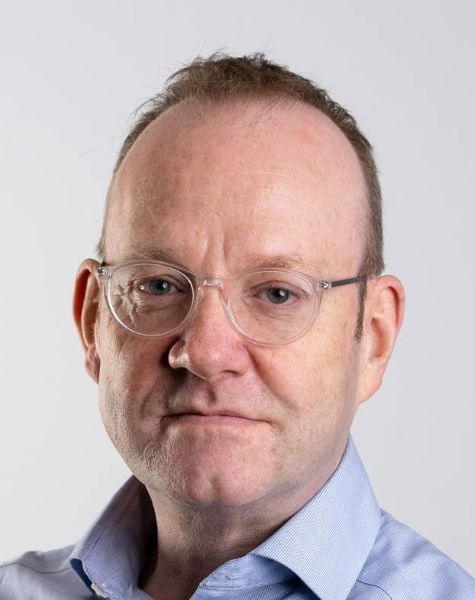
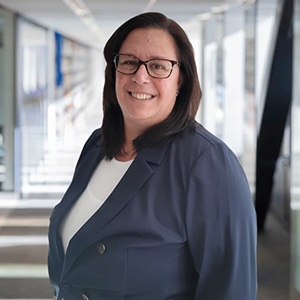
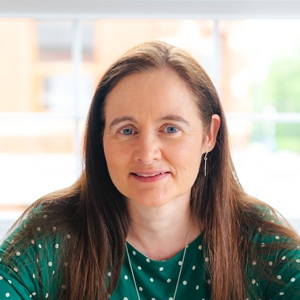
Researcher, Policy and Strategy Advisor
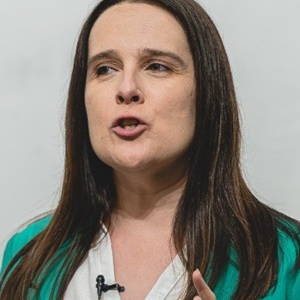
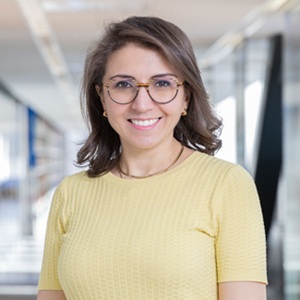
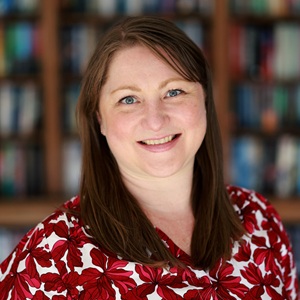
PGR Careers Adviser, University of Birmingham