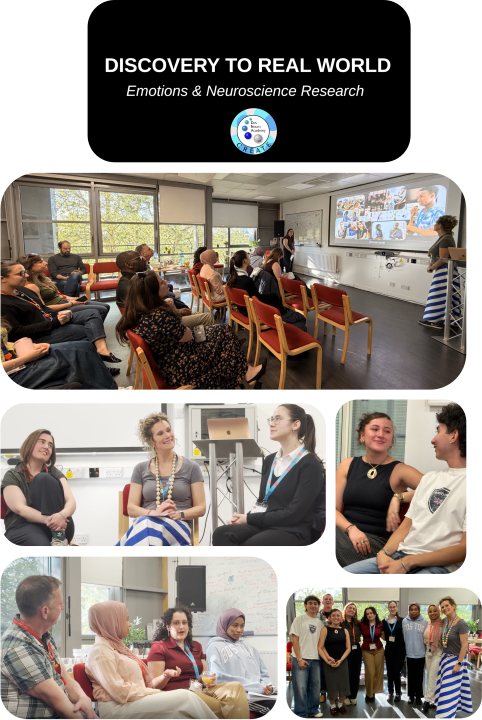
By Dr Leigh Wilson, Public Engagement Manager and Outreach Lead for The Centre for Developmental Neurobiology, King’s College, London. Leigh won the Innovative and Inclusive Practice Vitae ICE Award 2025. She has written this blog post and shared the pictures from the outcome of her award prize money proposal, where she worked with neuroscience researchers and a summer school cohort of students which involved a creative workshop and making a short film, linked below.
The short film project, Discovery to Real World: Emotions and Neuroscience Research, emerged from the broader ethos of the widening participation programme, Dev Neuro Academy CREATE, and the King’s College London neuroscience researcher community: exploring spaces where science, creativity, and reflection intersect to build a more inclusive and connected research culture. Supported through the Vitae ICE Awards Innovative and Inclusive Practice Award, the project explored how collaborative filmmaking and creative practice could help researchers and young adults reflect on the emotional dimensions of neuroscience research and the human experiences that shape scientific discovery.
In collaboration with artistic director, Mel Frances, the film project brought together researchers across all career stages from the Centre for Developmental Neurobiology, alongside year 13 Dev Neuro Academy summer school participants. Through a series of structured workshops, participants reflected on their experiences of research, belonging, discovery, and scientific identity. With researchers being positioned as ‘real people’, not just as experts, the project intentionally created reciprocal dialogue between researchers and young people, allowing both groups to shape the narrative together.
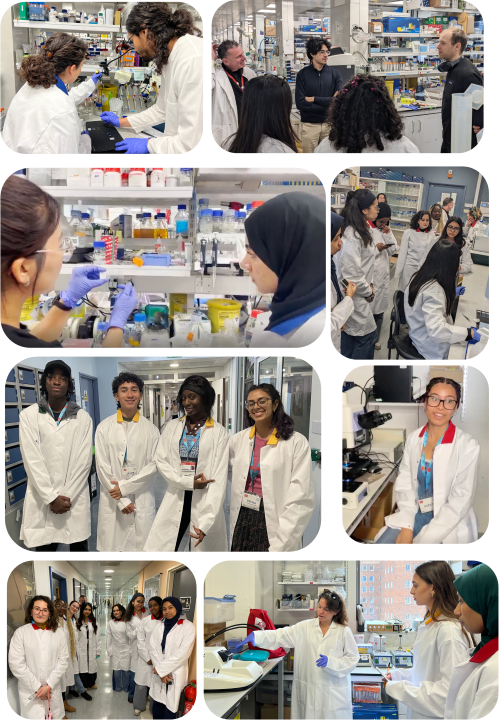
A central element of the project focused on exploring the “emotional landscape” of neuroscience research. Participants and researchers worked collaboratively to map emotions associated with discovery science, including hope, uncertainty, fear, challenge, excitement, confusion, and satisfaction. Through facilitated discussion and creative exercises, groups explored how these emotions connect to one another and how they emerge through both scientific work and personal experience. Importantly, the workshops created space for difference and disagreement, recognising that research environments are experienced differently across individuals and career stages.
The filmmaking process itself became a tool for reflection and co-creation. Participants generated interviews, audio recordings, visual artwork, lab footage, sculptures, and filmed conversations that explored the relationship between neuroscience and emotion. Rather than producing a scripted or purely informational piece, the project encouraged participants to capture authentic reflections, tensions, and moments of dialogue emerging from the workshops.
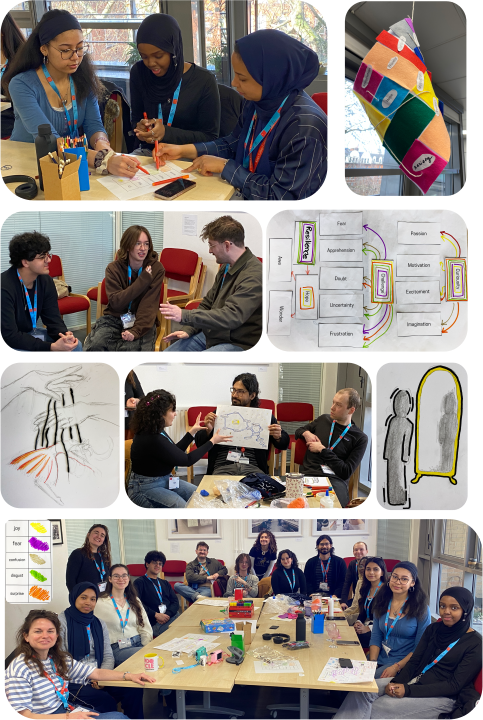
Alongside the emotional mapping exercises, participants also engaged critically with the developing film itself, reflecting on the story it was telling and the experience it offered audiences. This iterative and participatory approach ensured that the final output remained genuinely co-produced, with participants and researchers actively shaping both the creative direction and the themes explored within the work.
The resulting short film captures not only scientific aspiration, but also the emotional and cultural dimensions of research: uncertainty, hope, collaboration, creativity, vulnerability, and the desire to build more inclusive futures for science. More broadly, the project demonstrates how creative and reflective methodologies can strengthen research culture by fostering connection through outreach and public engagement across roles and career stages, encouraging openness and dialogue, and making research environments feel more accessible, participatory, and human.
Watch the film: Discovery to Real World: Emotions and Neuroscience Research