Skip to content

Vitae International Researcher Development Conference 2026 #VitaeCon2026

In-person: Tuesday 8 – Wednesday 9 September 2026, Dynamic Earth, Edinburgh

Online: Thursday 1 October 2026

Examining what works in researcher career support, the in-person element of the conference brings together evidence, practice and perspectives from across sectors to explore questions about effectiveness and investment. As researcher development has evolved over three decades, we know more about what works in career transition support, building capability across sectors and creating cultures that enable researchers to flourish.

The in-person element will be accompanied by a pre-conference workshop on Monday 7 September 2026, also at Dynamic Earth, Edinburgh. Places will be limited to 30 – bookings for this will open soon.

The online element of #VitaeCon2026 will take place on Thursday 1 October 2026, and will be free for Vitae members. We will extend the conversation, with the online element a chance to celebrate the innovation and emerging practice across the international researcher development community.


Is your organisation a Vitae member? Then login / sign up using your organisation email and login to access discounted member tickets. Have you already booked to attend this event? Then login to access the event agenda and other event materials.

Why attend?

Highlight icon. White star inside a blue circle

Insightful speakers

Highlight icon. White star inside a blue circle

Network with peers

Highlight icon. White star inside a blue circle

Be the first to hear of sector developments

Highlight icon. White star inside a blue circle

Contribute to discussions and insights

Agenda

N1: Networking – Skillfluence

→ Tue 8 September 2026

→ 08:50 to 09:20 GMT

→ Room – Blue

TBC

N2: New to Vitae

→ Tue 8 September 2026

→ 09:00 to 09:20 GMT

→ Room – Ozone

First time at a Vitae conference?

Join us at the ‘New to Vitae’ session

What is it?
In this informal session, members of the Vitae team will present on what Vitae do, and members of the community will host an ICE breaker activity to kick start the conference networking.
You will learn about:

  • How Vitae can support you in your role, and how you can make the most of your
    institutional membership
  • The Vitae Researcher Development Framework 2025
  • Our upcoming events and plans for 2026-2027

Visit the Vitae Zone on the event platform for the latest updates and reports from Vitae.

Keynote – Earning public trust in research and higher education: why investment in people matters

→ Tue 8 September 2026

→ 09:30 to 10:15 GMT

→ Room – Green

Room Green.

Higher education and research are operating in an increasingly complex political, economic and social environment. As governments look to research and innovation to drive productivity, growth and societal benefit, universities and research organisations face growing expectations to demonstrate their value and maintain public trust. In this keynote, Alicia will explore how public attitudes towards higher education and research are evolving, the wider policy and political context shaping the sector, and why investment in people remains fundamental to delivering long-term impact. Drawing on recent evidence and sector insights, she will examine how research, innovation and talent development can work together to strengthen the relationship between research and society, and what this means for institutions, funders and the researcher development community.
This keynote will be followed by an extended audience Q&A.

D3: Beyond the Tools: The Capabilities Researchers Need for GenAI

→ Tue 8 September 2026

→ 10:10 to 23:10 GMT

→ Room – Ozone

Room Ozone.

This interactive session will move beyond a focus on GenAI tools to explore the capabilities researchers need to work effectively, critically, and responsibly with AI across the research lifecycle. Participants will consider where and how GenAI is already being used in research practice, from developing ideas and reviewing literature through to analysis, writing, and dissemination. Through discussion and practical activities, the session will identify the skills and behaviours that become more important in an AI-enabled research environment. The session will support colleagues working with researchers to think about how they can frame support about GenAI in ways that are developmental, responsible, and grounded in broader researcher capability. Insights from the session will also help inform Vitae’s approach to AI resource development.

A4: Mapping the Technical Workforce: A Cross-Institutional Approach to Strengthening Technical Careers

→ Tue 8 September 2026

→ 10:25 to 11:25 GMT

→ Room – Salisbury

Room Salisbury.

Technical staff are a vital, yet often overlooked, part of the Higher Education workforce; facing persistent challenges around visibility, recognition, career development and workforce sustainability. This interactive workshop explores how coordinated institutional strategies, linking the Technician Commitment, Researcher Concordat and Research Culture Action Plans, can create meaningful, long-term improvements for technical professionals.

Participants will be introduced to the work of the UK Institute for Technical Skills and Strategy (UK ITSS), including its sector wide Career Pathways Action Group, which brought together 27 institutions to address key issues in talent management, professional development, career pathways and workforce planning. A central focus is the cross institutional workforce mapping project, which produced a practical toolkit enabling institutions to map, understand and develop their technical workforce.

Through short presentations and discussion, attendees will gain practical strategies and tools to help them implement or support workforce mapping withing their own organisations.

A2: PGR Career Development in the UK: What works, what matters, what next

→ Tue 8 September 2026

→ 10:25 to 11:25 GMT

→ Room – Blue

Room Blue.

The need for effective, inclusive, practice-informed career development for postgraduate research (PGR) students is vital at they embark on a breadth of career pathways. This session shares insights from a recent UKRI-commissioned UK-wide study exploring PGRs experiences, perceptions and engagement with career development, alongside perspectives from stakeholders across the research ecosystem. Barriers to career development and opportunities for targeted interventions will be highlighted.

Alongside presenting these insights, this interactive session will encourage discussion and practice sharing based on selected study data. This approach ensures that the voices of the PGRs and stakeholders whose participation informed the research remain central. Seven interconnected recommendations emerging from the study will be presented to stimulate further conversation and action.

Participants will gain:

• Evidence-based insights into PGR attitudes, behaviours and experiences of career development

• Examples of effective and emerging practice from across the UK sector

• Facilitated discussion to generate practical ideas for enhancing provision.

A1: Leading AI practice in research groups: A freely available framework for researcher developers

→ Tue 8 September 2026

→ 10:25 to 11:25 GMT

→ Room – Green

Room Green.

AI use in research groups is no longer emergent: it is present, uneven and largely ungoverned. For researcher developers, this creates a specific challenge: how do you support research leaders to govern something that is already happening, in the absence of consistent institutional or funder guidance?

This workshop introduces a freely available, CC-BY licensed training toolkit developed for UKRI Future Leaders Fellows and now available to the wider researcher development community. The toolkit, delivered through a sequenced set of resources: a leadership guide, hands-on worksheets, an AI planning canvas and a prompt library template, was designed to move research leaders from passive awareness to active governance of AI practice within their groups.

In the first part of the session, we will share the evidence base and design decisions behind the resource, including the pressing needs voiced by research leaders: acting without complete guidance, managing accountability across a research team and establishing documentation practices that can withstand scrutiny.

In the second part, participants will work through one resource component in small groups and discuss how it could be adapted or deployed within their own institutional context, including a reflection on how to use it in our own professional activities and teams.

Participants will leave with access to the full resource package and a practical sense of how it could be used within their own programmes and practice.

A5: Ask Vitae – the RDF Planner 2025

→ Tue 8 September 2026

→ 10:25 to 11:25 GMT

→ Room – Hutton

Room Hutton.

Curious about the refreshed RDF Planner?

Join us for this informal session to explore the refreshed RDF Planner and see how it could support your work with researchers.

You can see the Planner from a user perspective, ask practical questions about access, navigation and potential use, and take part in an informal Q&A about what has changed, how the new Planner works, and what support may be available. Whether you are already familiar with the RDF Planner or simply curious to find out more, you are welcome to drop in, have a look around and share any questions or feedback.

A3: Seven steps to equity for disabled doctoral students

→ Tue 8 September 2026

→ 10:25 to 11:25 GMT

→ Room – Ozone

Room Ozone.

Disabled doctoral students bring enormous expertise, insight and innovation to research, but less than half of disabled doctoral students in UK institutions agree that their institution provides the reasonable adjustments they need for equitable access to study. Unsurprisingly, these students also report lower overall satisfaction with their studies (PRES 2025).

In this interactive presentation we will first share findings and recommendations from a collaborative report produced by The Open University and Disabled Students UK, which sets out a roadmap for improving these students’ experiences across the UK HE sector.

The report, 7 Steps to Equity for Disabled Doctoral Students, draws on our research on the lived experiences of disabled researchers and doctoral supervisors. It highlights persistent structural challenges, including inconsistent access to adjustments, unclear support pathways, and a lack of disability-inclusive research cultures.

The report makes clear that the barriers faced by disabled doctoral students are not inevitable- they are structural, and therefore changeable. In this presentation we will share insights from the two research projects that led to this report and highlight actionable ways for universities to create research cultures where disabled scholars are not only included but fully supported to thrive.

After briefly outlining our findings and recommendations, participants will take part in an interactive workshop during which they will have the opportunity to reflect on and discuss implications for their own contexts and practices. Participants will work in groups, using anonymised quotations from disabled PGRs and supervisors to identify points in the doctoral journey where institutional environments can introduce barriers or facilitate success. Together we will explore practical actions that individuals and institutions can take to implement the recommendations in their own context and foster more inclusive and supportive doctoral journeys.

This session aims to move beyond awareness-raising towards collective reflection and action, empowering participants to develop role-specific strategies for supporting disabled PGRs and contributing towards more equitable and inclusive research cultures.

B3: Researcher Development in Practice: Enhancing Supervision, Well Being, and Performance Through Research Culture Change

→ Tue 8 September 2026

→ 11:50 to 12:20 GMT

→ Room – Ozone

Room Ozone. 

Supporting researcher development requires moving beyond individual resilience to transforming the research environments in which researchers learn, work, and lead. Yet academic cultures often continue to reward high workloads, constant availability, and sustained productivity, creating tensions between excellence, well-being, and effective supervision. This session presents Université Laval’s initiative to strengthen researcher development by transforming research culture and supervision practices within research teams and laboratories.

Drawing on a participatory pilot project conducted with graduate students and faculty members, the session will explore how institutions can move beyond individual resilience approaches to address structural factors that shape researchers’ experiences. Participants will learn about the evidence gathered through focus groups, the key challenges identified—including workload pressures, supervision practices, and team dynamics—and the development of an integrated framework centred on three dimensions: sustainable work practices and well-being, healthy and collaborative research teams, and high-quality research supervision.

The session will showcase practical actions implemented at Université Laval, including awareness-raising initiatives, community engagement activities, supervisor support resources, and tools designed to foster shared expectations, communication, and inclusive leadership within research teams. It will also examine lessons learned from implementation, highlighting both enablers and barriers to institutional change and discussing strategies for balancing research excellence with healthy research practices. Participants will be invited to discuss transferable strategies and institutional levers that support researcher development through research culture change, contributing to the broader conversation on what works in building sustainable, high-performing research environments.

By participating in this session, attendees will gain practical, evidence-informed strategies to enhance researcher development through research culture change. They will leave with concrete ideas, transferable practices, and institutional levers that can be adapted to their own contexts to support sustainable, inclusive, and high-performing research environments.

B1: Twenty-five years after What Do PhDs Do?: has the evidence changed minds?

→ Tue 8 September 2026

→ 11:50 to 00:20 GMT

→ Room – Green

Room Green.

It is 25 years since What Do PhDs Do? first challenged the myth that a PhD is a pathway to academia and nowhere else. Through What Do PhDs Do?, What Do Researchers Do? and the many reports and initiatives that followed, CRAC-Vitae and others across the sector have helped build an evidence base demonstrating the broad value of doctoral education across the labour market.
Yet we still encounter doctoral researchers and supervisors who hold onto the view that those who leave academia are deviating from expectation. If the evidence is now well established, why do these assumptions persist?
In this lively discussion, Sara Shinton, Charlie Ball and Robin Mellors-Bourne reflect on the origins and legacy of What Do PhDs Do?, what has changed over the last quarter century, and what still needs to change. They will consider whether the challenge has shifted from generating evidence to accepting what that evidence tells us, whilst also reflecting on the impact the work continues to have on their own careers and professional practice.

B2: Understanding Barriers and Building Better Careers in Energy Research

→ Tue 8 September 2026

→ 11:50 to 12:20 GMT

→ Room – Blue

Room Blue.

This session presents findings from a qualitative study exploring barriers to career progression and what works in researcher career support across the energy and net zero research sector. Drawing on interviews with PhD students, early-career researchers, academics, and researchers who have transitioned into industry, it examines how funding models, institutional structures, mentoring, and labour market conditions shape career pathways. The session highlights three key themes: the benefits of structured doctoral training, particularly Centres for Doctoral Training (CDTs); the need for career development from the earliest stages of research careers; and the influence of informal networks and mentorship on access to opportunities and career progression. Participants will gain evidence-based insights into where current support falls short and how institutions can create more equitable and sustainable researcher careers. Practical recommendations will focus on embedding career development, formalising mentoring and networking, and strengthening links between academia and industry, with lessons applicable across disciplines.

B4: Doctoral Futures: A pilot programme integrating coaching, careers education, and peer support for arts & humanities researchers at King’s College London

→ Tue 8 September 2026

→ 11:50 to 12:20 GMT

→ Room – Sailsbury

Room Sailsbury.

Sometimes no matter how good the careers provision for researchers is at an institution, there will be groups whose specific challenges and needs can’t be meaningfully addressed by the general support offered. The career and employability barriers being faced by Arts & Humanities researchers are growing, and support for them needs to not just surface skills and broaden horizons but also allow for reflection on values and identity and it needs to happen in community, not isolation.

This session shares Doctoral Futures, an eight-week hybrid programme combining group coaching, peer support and traditional careers education for A&H researchers exploring careers beyond academia. Laura will present the programme design, some of the activities and digital tools used, as well as the challenges encountered and participant feedback.

You’ll leave with a practical overview, ideas for adapting something similar in your own institution, and considerations for running group-based interventions more broadly.

C2: Using Improvisation to Develop Active Listening, Co-Creative Practice and Inclusive Communication in Research Supervision

→ Tue 8 September 2026

→ 13:30 to 14:30 GMT

→ Room – Blue

C4: From Knowing to Doing: A Training Model That Gets Researchers into Real Career Conversations

→ Tue 8 September 2026

→ 13:30 to 14:30 GMT

→ Room – Salisbury

Room Salisbury.

Talking to people can be a good way to explore career options. However, once early career researchers are convinced of this, usually nothing happens. This is a typical knowing-doing gap, that keeps “informational interviews” perpetually recommended and rarely attempted. At the German Cancer Research Center, we built a training to close that gap: Targeted Career Orientation – Practising Informational Interviews. Participants do not just plan future conversations. They arrive with real interviews already scheduled and spend two hands-on days talking to Alumni. Beforehand, they use our Alumni platform as well as CareerCheck.eu, a free online tool that helps researchers translate their skills, interests and values into a concrete orientation focus and information to prepare for these conversations. What happens when researchers who found networking intimidating join and just do it? We share the programme design, pilot learnings, and a transferable, low-resource model any institution can adopt.

C3: Beyond the Prompt: Combining AI and Thinking Environment Approaches in Researcher Career Development

→ Tue 8 September 2026

→ 13:30 to 14:30 GMT

→ Room – Ozone

Room Ozone.

Artificial intelligence is becoming an increasingly common feature of researcher career development, but where does it genuinely add value, and where is human expertise indispensable?

This interactive workshop introduces Thinking Environment principles as a framework for critically exploring the role of AI in researcher development and career conversations. Through practical activities, participants will experience how attention, listening and independent thinking can strengthen AI-supported career exploration. They will explore how AI can help researchers identify transferable skills, recognise strengths and investigate career options, while evaluating outputs, refining prompts and discussing the benefits and limitations of AI for career reflection.

Participants are invited to contribute useful AI prompts and tools to a shared Padlet, creating a resource for all. They will leave with adaptable prompts, practical facilitation techniques and greater confidence in integrating AI into researcher development in ways that are reflective and centred on the needs of researchers.

C1: From Fellow to Leader: Learning from the University of Liverpool Fellows Development Programme 

→ Tue 8 September 2026

→ 13:30 to 14:30 GMT

→ Room – Green

Room Green.

What does it take to support a research fellow through one of the most pivotal transitions in an academic career, from funded researcher to independent leader? This session will share multi-year  evidence from the University of Liverpool Fellows Development Programme to explore what effective, structured development for this career transition looks like in practice, and its impact.

Designed specifically for research fellows, the University of Liverpool Fellows Development Programme combines skills workshops, peer learning, community building, and group coaching to support researchers to develop a leadership identity, successfully manage projects and lead teams, and build a competitive funding portfolio. This programme was designed to cover the different levels of learning: Cognitive, Experiential, Reflective, and Behavioural, while also recognising the importance of community building to ensure a sustainable network of peer-led support.

In this session, participants will explore evidence of the programme’s impact across multiple years, and what these data say about which elements of the programme drive change. Participants will also have opportunities for peer-led discussion to enable the sharing of best-practice.

By attending this session, participants will gain:

– Evidence-informed insight into what a structured, multi-component development programme can achieve for research fellows

– A practical framework for designing or refining researcher development provision at their own institution, drawing on lessons from the University of Liverpool Fellows Development Programme across multiple cohorts

– Lessons learnt and practical ideas shared from the researcher development community.

C5: What Does Effective Research Leadership Look Like? 

→ Tue 8 September 2026

→ 13:30 to 14:30 GMT

→ Room – Hutton

Room Hutton.

This session invites delegates to help shape the development of a refreshed Vitae RDF Lens, focused on the skills and behaviours that are developed or acquired through, research leadership. Co-led by Vitae and the Leadership Community of Practice, convened by Manchester Metropolitan University and Oxford University, the session will draw on sector expertise to explore what effective research leadership looks like in contemporary research environments. Participants will explore the skills, behaviours and attributes that matter most, including in self-leadership, leading others, and setting the vision and strategy needed to build enabling, supportive and responsible research cultures. The outputs will inform the development of the Vitae RDF lens, helping to ensure it is credible and practical for researchers, researcher developers and institutions supporting research leadership.

Panel: What makes career transitions work? Evidence and experience from across pathways

→ Tue 8 September 2026

→ 14:50 to 16:15 GMT

→ Room – Green

Room Green.

This panel explores what underpins successful career transitions across different career pathways, examining the individual, relational and structural factors that influence positive outcomes. It focuses on transferable lessons for supporting researchers and others through transition points.

Keynote speakers
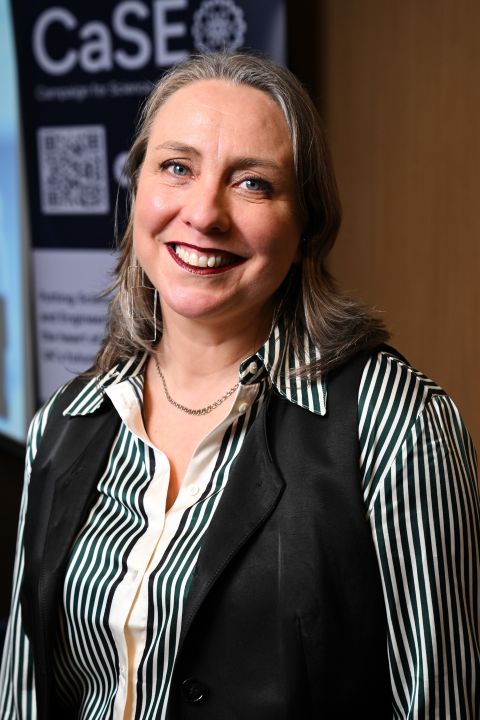
Dr Alicia Greated - a woman smiling at a camera with dark shoulder length hair wearing a striped shirt and dark waistcoat.

Executive Director of Campaign for Science and Engineering (CaSE)
A man wearing transparent glasses in front of a blank background.

Researcher, Policy and Strategy Advisor
A white woman with dark hair wearing a green jacket, talking with a microphone attached to her top against a plain background.

PGR Careers Adviser, University of Birmingham

Headshot of person with grey background

Dr Martha Beard

Researcher Development Manager, Vitae

Martha is the Researcher Development Manager in the Learning & Development Team at Vitae, where she manages, develops, and delivers programmes supporting the professional development of researchers and researcher developers in the UK and internationally. Before joining Vitae, Martha completed her doctorate in art and humanities, collaborating with stakeholders in Northern Ireland to evaluate oral history practices from the peace process. Martha has over ten years of experience as a teacher, researcher, and associate lecturer, and holds a Master’s in Education. She has also pursued opportunities in the non-profit sector, including a PhD Fellowship at Cumberland Lodge.

Dr Alicia Greated - a woman smiling at a camera with dark shoulder length hair wearing a striped shirt and dark waistcoat.

Dr Alicia Greated

Executive Director of Campaign for Science and Engineering (CaSE)

Dr Alicia Greated is Executive Director of Campaign for Science and Engineering (CaSE) where she leads a dynamic organisation that has shaped significant changes in public policy.

Alicia joined CaSE in April 2024 and has extensive experience of strategic leadership and management in the R&D sector, including as a CEO, both in the UK and overseas. Prior to joining CaSE Alicia was CEO of the Knowledge Transfer Network (KTN), and before that, was Global Director of Research and Enterprise at Heriot Watt University, from 2015-2019.

Alicia spent many years working for the UK Research Councils. She was founder and Director of Research Council UK (RCUK) India at the British High Commission in Delhi, and Director RCUK China at the British Embassy in Beijing. She also worked as acting Director of Research for the Arts and Humanities Research Council (AHRC) and was Head of Engineering at the Engineering and Physical Sciences Research Council (EPSRC).

Alicia is a Fellow of the Royal Society of Edinburgh and the Institution of Engineering and Technology. Alicia also holds a number of advisory roles including as a member of the Royal Society’s Science, Industry and Translation Committee, and the Strategic Board of Interface.

Professor David Oswell

Vice-Chancellor for Research and Knowledge Exchange, Professor of Sociology at Goldsmiths, University of London

David Oswell is Provost and Deputy Vice-Chancellor for Research and Knowledge Exchange and a Professor of Sociology at Goldsmiths, University of London. Since January 2017, he has been Pro-Warden for Research and Enterprise at Goldsmiths, University of London. He joined Goldsmiths in 2001 and from 2013 to 2016 was Head of the Department of Sociology. He has published widely on cultural theory and the social life and history of children, childhood and children’s rights.

Dr Alina Congreve

Facilitator

Dr Alina Congreve works across higher education, researcher development and sustainability, supporting individuals and institutions to navigate complex challenges and demonstrate meaningful change. She is an Associate with Vitae and has designed and delivered professional development programmes for researchers, researcher developers and higher education leaders across the UK and internationally.

Alongside her work in researcher development, Alina has extensive experience in evaluation, organisational learning and systems thinking, including projects spanning higher education, public policy, sustainability and interdisciplinary collaboration. Her work focuses on helping organisations understand what difference their activities make, how change happens in complex environments, and how evidence can be used to support both accountability and improvement.

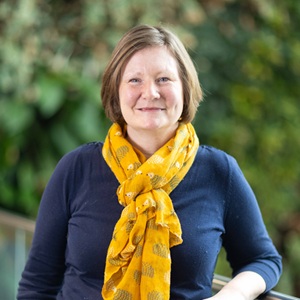
A white woman with short cropped hair wearing a bright yellow scarf.

Sarah Allen

Career Pathways Lead, UK Institute of Technical Skills

Sarah Allen is the Career Pathways Lead for the UK Institute of Technical Skills and Strategy. She supports career development and pathways initiatives within the Higher Education and Research Institute technical community at a strategic, local and individual level. With a background in recruitment and career advice and guidance, Sarah is passionate about improving career development and progression opportunities for technical professionals.

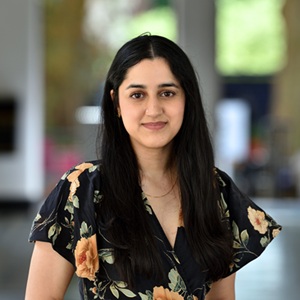
A woman with dark hair and a floral top looks at a camera.

Dr Gursimran Oberoi

Research Staff Development Consultant, King's College London

Dr Gursimran Oberoi is an award-winning Research Staff Development Consultant at King’s College London. She provides strategic delivery against the Researcher Concordat through improvements to policy, process and capacity building. Supporting 3,000 research staff and their line managers at the University, Gursimran’s work focuses on implementing the Concordat’s 10-day entitlement to professional development through policy and infrastructure, and maintaining oversight of the training and development opportunities supporting research staff and their managers. She is also the King’s project co-lead for the Career Pathways Action Group focused on Mapping the Technical Workforce, an ITSS-funded consortium seeking to analyse, report on and improve technical career pathways across the sector. Gursimran is passionate about researcher development in its most inclusive sense and has over eight years of experience in this field working with universities, research councils and charities such as the Wellcome Trust, Association for Art History and National Institute for Health and Care Research. She is a trustee of the Watts Gallery Trust.

Dr Ben Gridley

Head of Technical Services (Natural, Mathematical and Engineering Sciences), King's College London

Dr Ben Gridley is Head of Technical Services in the Faculty of Natural, Mathematical and Engineering Sciences at King’s College London. In this role Ben has operational and strategic oversight of the faculty’s technical, space and health and safety portfolio. With a research background in the chemical sciences and over a decade of management experience in HE, Ben is an award-winning strategic technical leader with expertise in organisational design and project management. He has played a prominent role in developing and delivering his institutions’ Technician Commitment action plans as a passionate advocate for the technical community, and co-leads the Career Pathways Action Group project on understanding and mapping the technical workforce.

A woman with brown hair looks at the camera.

Dr Stefania Silvestri

Researcher Developer, University of Liverpool

Dr Stefania Silvestri is a Researcher Developer within The Academy, University of Liverpool, responsible for delivering the Prosper cohort at Liverpool, a career development programme specifically designed for postdocs. She is part of a wider team working on Prosper rollout across the sector, which aims at creating a sustainable practice sharing model of postdoctoral career development.
In her role Stefania brings her experience as an international postdoc in Humanities, together with her passion for languages and cultures and her enthusiasm to support others in developing their career potential.

A woman with short cropped hair wears glasses and stands in front of bookshelves.

Dr Fiona McBride

Senior Researcher Developer, University of Liverpool

Dr Fiona McBride is a Senior Researcher Developer within The Academy at the University of Liverpool, where she leads Prosper – an innovative model of postdoc career development designed to unlock postdocs’ potential to thrive across multiple career pathways, both within and beyond academia.
Fiona has played a key role in Prosper from its start in 2019 as a Research England Development (RED) fund project to its current UKRI funded nationwide rollout and embedding at the University of Liverpool.

Dr Joanna Young

Director, Electv Training

Dr Joanna Young is the founder and director of Electv Training, a specialist provider of professional development for researchers in higher education, established in 2011. She works with PhD students, postdoctoral researchers and research leaders across the UK and internationally, with a particular focus on AI in research, career development, and writing and publishing. She delivers workshops, on-demand courses and training resources to universities and doctoral training programmes, and leads the development of Electv’s growing AI training portfolio. She holds a PhD and has a postdoctoral background in neuroscience and informatics and is a regular contributor to researcher development conferences.

Professor Sara Shinton

Professor of Practice in Research Leadership, University of Bath and National Lead for Research and Innovation Leadership for the FLFDN

Sara Shinton is shaping a distinctive research leadership strategy at the University of Bath and serves as National Lead for Research and Innovation Leadership for the FLFDN, after six years as Director. A chemist by training, Sara has dedicated her career to championing researcher development.

Previously Head of Researcher Development at the University of Edinburgh and founder of Shinton Consulting, she is a passionate advocate for improving research environments. Having co-led nearly £15 million in funded culture and development initiatives, Sara is dedicated to removing institutional barriers, building communities, and making the definitive case for investing in researchers.

Helen Bowes-Catton

Senior Lecturer, The Open University

Helen Bowes-Catton is Academic Lead for PGR Training at the Open University. Her research explores how people experience social and institutional spaces where they are seen as, or feel, ‘out of place’. Her current work examines disabled, neurodivergent, LGBTQIA+, racialised and classed experiences of doctoral education. She also continues to contribute to LGBTQIA+ studies, and is currently co-editing The Routledge International Handbook of Bisexuality+.

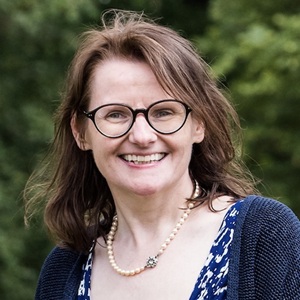
A white woman with dark hair wearing glasses with trees behind her.

Dr Gráinne O’Connor

Consultant Researcher, The Open University

Gráinne O’Connor is a consultant researcher who obtained her PhD from The Open University. She lives with an acquired long-term health condition.

Prof Inma Alvarez

Professor of Education, The Open University

Inma Alvarez is Professor of Education in the School of Languages and Applied Linguistics at The Open University.  Her interdisciplinary scholarly work in higher education has involved working across different epistemological and pedagogical traditions for over three decades. She has taught, published and conducted research on equity, diversity and inclusion (EDI) with a focus on developmental opportunities for academics, learners and researchers crossing national borders. She is currently a member of the Society for Research into Higher Education EDI Working Group, and of the Equity in Doctoral Education through Partnership and Innovation (EDEPI) project.

Prof Lindsay O’Dell

Associate Dean Research, Faculty of Wellbeing, Education and Language Studies, The Open University

Lindsay O’Dell is Professor of Critical Developmental Psychology at the Open University. The focus of her work has been on health, development and social care of children and families, particularly children and adults with autism and other neurodiverse conditions. Lindsay was a co-author of the British Psychological Society’s practice guidelines Working with autism – best practice guidelines for psychologists.pdf (bps.org.uk) Lindsay has had a number of leadership roles, including as the Director of the Graduate School at the Open University. It was in this role that she first began research into access, participation and success in doctoral studies for disabled students.

Melanie Rimmer

Postgraduate Research Student, The Open University

Melanie Rimmer is a social psychologist whose research focuses on disability, equality and social justice. She is currently undertaking a PhD at The Open University, using discourse analysis to explore the ways learning disabilities are talked about in everyday and professional contexts. Before beginning her doctorate, Melanie worked as a researcher in the NHS and at the University of Sheffield. She is also a Senior Fellow of the Higher Education Academy (SFHEA) and teaches on a range of Open University undergraduate modules, alongside creating study skills resources to support student learning.

Dr Nicoleta Tipi

Senior Lecturer, The Open University

Nicoleta Tipi is former Director of Research Degrees Programme in the Faculty of Business and Law, and Senior Lecturer in Operations and Supply Chain Management at The Open University Business School (UK). She is an experienced research supervisor, having supervised 22 PhD students to successful completion. Her research ranges from projects looking at the resilience and sustainability of supply chain system to business analytics and doctoral education.

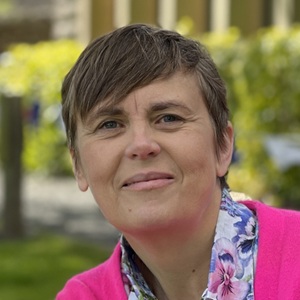
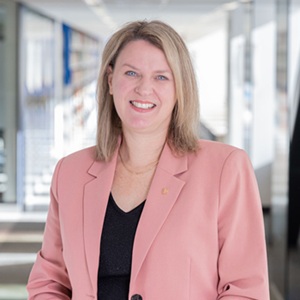
A white woman with blonde hair wearing a pink jacket looking at the camera, standing in front of windows and a staircase.

Annie Pilote

Dean, Faculty of Graduate and Postdoctoral Studies, Laval University

Dr. Annie Pilote is Dean of the Faculty of Graduate and Postdoctoral Studies at Université Laval (Québec, Canada). A full professor at this institution, she has expertise in educational administration and policy. Her research in the sociology of education focuses on student pathways in higher education, with a particular emphasis on equity issues. Prior to her current role, she was Associate Dean for Research and Graduate Studies in the Faculty of Education (2011-2012, 2014-2022). She led a number of initiatives to promote student retention and educational success, particularly among First Peoples. She is President of the Association of Deans of Graduate Studies in Québec and a member of the Board of directors of the Canadian Association for Graduate Studies CAGS. She also serves as President of the Commission de l’enseignement et de la recherche universitaire (Conseil de l’enseignement supérieur du Québec).

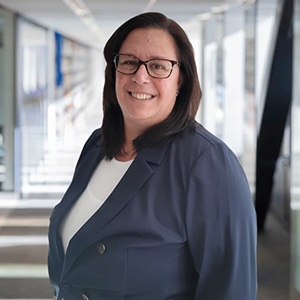
A white woman wearing dark glasses with dark hair, wearing a navy jacket standing in front of a staircase and windows in the background.

Marie Renée Blanchet

Associate Dean - Graduate and Postdoctoral Studies, Laval University

Holding a PhD in Experimental Medicine from Université Laval, Ms. Blanchet is a professor at the Faculty of Medicine and a researcher in the Lung Research Axis at the Quebec Heart and Lung Institute Research Center. She served as Director of the Master’s and PhD programs in Clinical and Biomedical Sciences from 2020 to 2025 and currently holds the position of Vice-Dean at the Faculty of Graduate and Postdoctoral Studies, Université Laval.

Seima Souissi

Reasearch and planning officer, Laval University

Seima Souissi is a Research and Planning Officer at the Faculty of Graduate and Postdoctoral Studies at Université Laval. She coordinates initiatives that promote graduate student success and well-being, support graduate supervision, and foster responsible conduct of research. She holds a Ph.D. in Public Communication from Université Laval and also serves as a lecturer in the Department of Information and Communication at the same institution.

Headshot of person with grey background

Dr Yolana Pringle

Director of Programmes and Partnerships, Deputy CEO, Vitae

Yolana leads CRAC and Vitae’s portfolio of activities, projects, and programmes, ensuring the organisation remains an independent and trusted provider of evidence on all aspects of research careers. She advocates for creating conditions that enable individuals to thrive in their research careers while fostering a sense of community and driving positive change for people, regardless of their role, background, or career aspirations. Yolana is also dedicated to building strong collaborations and partnerships to further CRAC and Vitae’s mission.

Headshot of person with long grass in background

Dr Robin Mellors-Bourne

Director of Research and Intelligence, CRAC

Robin joined CRAC in 2004 as Commercial & Business Development Director, but has led its research and evaluation operations since 2009. His primary research interests include: transitions into and from higher education; career decision-making; internships, placements and work experience; careers in engineering and STEM; postgraduate and research careers; diversity and inclusion; and impact evaluation studies. He has created and led over 60 career- and HE-related research or evaluation studies, using a wide range of methodologies, both quantitative and qualitative as well as secondary data studies, with students, graduates, postgraduates, alumni and staff in HE institutions and other employment settings.
He is an expert on HE research careers and has developed the career-related evidence base that underpins the Vitae programme. He is regarded as a national expert on researcher careers data and career tracking and has represented the UK on this at international fora.

Charlie Ball

Head of Labour Market Intelligence, Jisc

Charlie Ball is Head of Labour Market Intelligence at Jisc. An experienced labour market analyst, he specialises in the production, interpretation and dissemination of higher education research, particularly outcomes data for graduates and postgraduates.

A white woman with long brown hair stands outside with trees behind her.

Dr Katy J. McKenzie

Fellowships Manager, University of Nottingham

I am Fellowships Manager and EDI+ Fellow in Energy at the University of Nottingham. A physical chemist by training, I began my career in electrochemical processes and scale-up before moving into research, academic and technical leadership roles across higher education. With more than 25 years’ experience supporting students and researchers in STEM, I now focus on helping Early Career Researchers build inclusive research cultures, strengthen interdisciplinary collaboration and maximise research impact. My work explores the systemic factors affecting participation and progression in research careers. I also contribute to national initiatives addressing researcher precarity, equity, diversity and inclusion across the research ecosystem.

A white woman wearing glasses and a green leaf patterned top with brown hair sitting in front of a dark grey background.

Dr Lennie Foster

Centre Manager – UK SCALE Centre│EPSRC EDI+ Fellow, Loughborough University

Dr Lennie Foster is Centre Manager for the UK SCALE project, driving innovation in supply chain education and industry engagement. As an EDI+ Fellow, Lennie has championed inclusive practices through the creation of an EDI Toolkit and practical guidance to embed equality, diversity, and inclusion across a variety of projects. She coordinates high-profile events, including annual symposia, webinars, and roundtables, and fosters global collaboration through partnerships with MIT and UK SCALE’s network. Lennie brings creativity to engagement activities, designing unique approaches that make complex supply chain topics accessible and engaging.

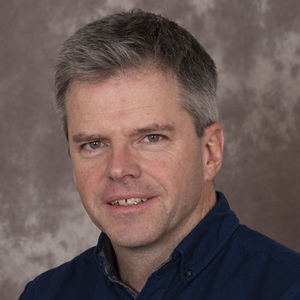
A man wearing a dark shirt in front of a grey dappled background.

Prof Simon Rees

Deputy Director for Academic Excellence, Durham University

Professor Simon Rees is Deputy Director for Academic Excellence at Durham University, where he leads researcher and educational development, and institution-wide academic development initiatives. A National Teaching Fellow and Principal Fellow of Advance HE, he has extensive experience in higher education leadership, curriculum innovation, and professional recognition frameworks. His work focuses on creativity and storytelling in science education, doctoral development, and the scholarship of teaching and learning. Simon is also an ILM Level 7 executive coach and delivers international training and consultancy, supporting educators and researchers to enhance teaching, learning, and professional practice.

A white woman with short hair stands against a plain background.

Laura Johnson

Careers Consultant for Researchers, King's College London

Laura is a qualified career guidance practitioner and has spent the last three years working with the doctoral researchers and research staff at King’s College London as they navigate their careers, both in and beyond academia.  Her work includes 1:1 career guidance, group coaching and delivering workshops on a range of career development themes.  She is also a co-host of the podcast ‘Careers In Your Ears’

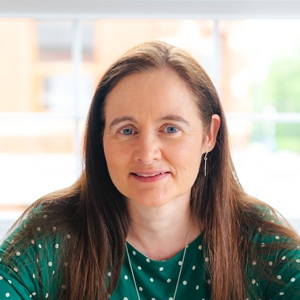
A white woman with brown curly hair smiles at the camera, in front of a grey background.

Dr Barbara Janssens

Career Manager, DKFZ German Cancer Research Center

Dr. Barbara Janssens is a careers advisor for postdoctoral researchers at DKFZ since 2011. Trained as a molecular and cell biologist (PhD, Ghent University), she brings direct research experience from a postdoctoral fellowship in Paris and five years as a scientific editor at Wiley-Blackwell, giving her career guidance practice a first-hand understanding of both academic and non-academic transitions. Barbara co-founded CARE, a Europe-wide network of careers advisers for researchers and is driven by using real career data to inform and inspire researchers’ transitions.

A white woman with brown hair and smiling wearing a dark jacket.

Marion Gürth

Deputy Career Manager, German Cancer Research Center (DKFZ)

Marion Gürth is a careers advisor for doctoral researchers at DKFZ since 2013. With a background in molecular biology from the Universities of Darmstadt and Heidelberg, and experience spanning both institutional research and freelance work, she brings a practitioner’s perspective grounded in the realities of early-stage research careers. Marion has extensive experience in science management and project coordination. She is passionate about connecting early career researchers with opportunities and fostering exchange and mentoring across career stages and sectors.

A white woman with dark brown hair wearing a green top in front of a light background.

Anne Marie Sowerbutts

Researcher Developer, University of Manchester

Dr Anne Marie Sowerbutts is a Researcher Development Officer at the University of Manchester, delivering the Prosper Career programme. She is dedicated to helping researchers unleash their full potential, supporting them to find fulfilling careers, whether within or beyond academia. Alongside her university role, Anne Marie is a certified coach and runs an independent practice, delivering workshops and coaching for researchers. Using the Thinking Environment methodology, she enables individuals to think more clearly, act with intention and develop creative, empowered approaches to their careers.

A white woman with dark hair wearing a red patterned top standing in front of a bookshelf.

Amy Birch

Senior Researcher Developer (Research Staff), University of Liverpool

Amy is a senior researcher developer with 15 years’ experience working in UK and Irish Higher Education institutions. She is passionate about championing fair and equitable opportunities for research staff, delivering leadership and professional coaching, and developing policies that enable a positive research culture and environment for all staff. She lead’s The Academy’s career and professional development programme for all staff who research at University of Liverpool, including cross-institutional projects to deliver an integrated development offer enabling staff to excel as research leaders and academics.

Headshot of person with grey background

Helen Hampson

Head of Learning and Development

Helen Hampson is a researcher development specialist with more than 15 years’ experience designing, leading, and evaluating professional development programmes for researchers and research staff. At Vitae, she leads learning and development initiatives that support researchers across the UK and internationally, working with universities, research organisations and sector partners to strengthen researcher capability, career development and research culture. Before joining Vitae, Helen managed a large-scale professional development programme focused on developing teachers’ research and enquiry skills. Prior to this, she spent ten years at the University of Sussex, leading the Researcher Development Programme within the Doctoral School, working closely with researchers, academic leaders, and professional services colleagues to enhance research culture and researcher support. The L&D team combine expertise in researcher development with a strong grounding in learning and development practice, enabling the design of programmes that create lasting impact for individuals and organisations.

Ben Kidd

Global Research Engagement & Partnerships Lead, ARUP

Marie-Pierre Moreau

Professor of Education and Education Research Lead, Anglia Ruskin University

Laura Minogue

Head of Academic Professional Development, St Mary's University, Twickenham

I am Head of Academic Professional Development in the Centre for Teaching Excellence and Student Success at St Mary’s University, Twickenham. I lead the PgCert in Academic Practice (PGCAP) for new lecturers and the Advance HE Fellowships Programme. I design and deliver workshops and resources for academics and organise the annual Festival of Learning and Teaching.

I am a mentor for Advance HE’s Aurora programme for women in leadership in HE. I am passionate about women’s development in the workplace and how mentoring can support change and growth. I was on the SAT team at St Mary’s leading to the successful Athena Swan Bronze Award for gender equality in 2023.

I first joined St Mary’s as a visiting lecturer in the Institute of Education in 2013. I taught on the PGCE primary and secondary and BA Initial Teacher Education for Modern Foreign Languages (French and Italian). I then became a learning development lecturer working with students and staff to develop academic and assessment literacy. Prior to this I was a teacher of French, Italian and Spanish in primary and secondary schools in the Borough of Richmond.

Fouzia Zayou

Research Associate, Chair Marie Curie Alumni Association UK Chapter

A man wearing transparent glasses in front of a blank background.

Dr Rory Duncan

Researcher, Policy and Strategy Advisor

Rory is a research and innovation strategy and policy advisor working with universities, government and research funders in the UK and internationally. He has held senior academic and professional services roles in Scottish and English universities and has taught and undertaken research around the world.

As UKRI Director of Talent and Skills, Rory led UKRI’s postgraduate researcher strategy and other major people-centred programmes. He secured funding for initiatives including the UKRI Future Leaders Fellowships through successive UK Government Spending Reviews, and helped shape national strategies on research culture, place and innovation.

Today, Rory advises universities, funders, governments and research organisations on research and innovation strategy, governance and delivery. Working across these different parts of the research and innovation system gives him a distinctive perspective on how national policy, funding and institutional decisions interact in practice. His work focuses on helping organisations make better strategic decisions about research investment, talent and organisational capability.

Rory is Founder of Duddingston Consultancy Ltd, a Fellow of the Royal Society of Edinburgh, and recipient of its Senior Public Engagement Medal for his “passionate and enormously impactful advocacy for research and education in Scotland, the UK and internationally.”


A white woman with dark hair wearing a green jacket, talking with a microphone attached to her top against a plain background.

Dr Holly Prescott

PGR Careers Adviser, University of Birmingham
Holly is a career guidance practitioner and trainer specialising in supporting doctoral and postdoctoral researchers, with over 10 years’ experience helping researchers feel more confident about their next steps.

In 2021, Holly launched ‘PostGradual’ – a blog tackling some of the trickiest questions around post-PhD careers – which has so far attracted over 80,000 unique viewers from over 150 different countries. Her book, Navigating Careers Beyond Academia: A Practical Handbook for Doctoral and Postdoctoral Researchers is released by Routledge in August 2026.

Holly holds a PhD from the University of Birmingham, PGDip (QCG) in Career Guidance from Coventry University/CDI, and FHEA accreditation.

Dr Kate Jones

Researcher Development and Training Manager, Manchester Metropolitan University

Kate is a researcher developer at Manchester Metropolitan University, focusing on research leadership development and training, research culture and environment, and supporting researcher communities across all career stages and role types. She has over fifteen years’ work experience in the higher education sector, as a developer, researcher and university tutor. Kate specialises in academic and research staff development. Her particular interests and areas of expertise include mentoring, research leadership, researcher voice, evaluation of researcher development, researcher competencies, and HE and research policy.

Kate currently leads the mid-career researcher mentoring (MCRM) scheme with colleagues at the Universities of Lancaster, Sheffield Hallam, Manchester, Salford, Leeds Beckett and Huddersfield. Kate co-created the Greater Manchester Researcher Development Partnership with Sarah Ashworth (UoM) and Angela Midgley (UoS). Kate is co-chair of the Leadership Community of Practice with Maddie Mitchell (University of Oxford).

A white woman with brown hair and a fringe stands in front of some trees.

Dr Angela Midgley

Researcher Development Manager, University of Salford

Dr Angela Midgley is a Researcher developer at the University of Salford. Angela’s role involves implementing researcher development initiatives and high-quality development activities, which are aimed at embedding effective practice and developing the capabilities of all research staff across all career stages and disciplines including Postgraduate Researchers. Angela has a strong research background, working with clinical and academic teams in multiple settings and believes strongly in the importance of proactively engaging with people from all different backgrounds with a key objective being to support knowledge exchange and research impact.

A white woman with short cropped hair with a natural landscape behind her.

Chris Atkinson

Researcher Developer, Lancaster University

Chris Atkinson is a researcher developer at Lancaster University. Her career has largely been in education. This has included teaching in inner city schools in London and Leeds and qualification and assessment development for AQA and other awarding bodies.

A brown woman with dark brown hair wearing a black top standing in front of a grey background.

Dr. Samantha Fernandes

Researcher Development & Training Officer, Manchester Metropolitan University

Sam joined Manchester Metropolitan University in January 2025 as a Researcher Development and Training Officer primarily working with research staff and academics. Alongside working at McrMet, Sam leads the Career Conversations series through the Greater Manchester Researcher Development Partnership (GMResDev) collaboratively with the universities of Manchester and Salford, and is a member of the CEDARS steering group, which will lead the strategic development of CEDARS 2027 with Vitae by reviewing the current survey. Sam is also a Fellow of the Higher Education Academy (FHEA).

Dr Jennifer Lynch

Researcher Development & Training Officer, Manchester Metropolitan University

Jen joined Manchester Metropolitan in September 2024 as a Researcher Development and Training Officer, working primarily with research and academic staff. Alongside her work at Mcr Met, Jen is a member of the RDF Community of Practice Steering Group and has led on cross-institutional collaborations including a British Academy ECR Network Practice-related Research Information and Showcase event. Jen has over 10 years’ experience researching and working in the HE Sector where she gained a passion for supporting and empowering researchers to achieve their career goals, which led to her to pursuing a career in Researcher Development.

Dr Stephanie Zihms

Contributor

Stephanie is a Lecturer in Academic Writing based in Researcher Development at GCU. She focuses on developing a variety of writing support and communities for researchers to help with thesis writing, writing for publication or other written outputs. One of her key research interests is peer-writing groups and using creative methods to support writers. She also hosts the Power Hour of Writing, an inclusive peer-writing community and has designed innovative retreat formats including Write-Away! On the Move, a writing retreat held on a train between Glasgow and Aberdeen.

Dr Amy Cartwright

Head of Researcher Development (GCU)

Dr Amy Cartwright is Head of Researcher Development in Research and Knowledge Exchange Services (RKES), having joined the University in 2012. Amy has worked in researcher development since 2005, previously at Strathclyde and Edinburgh Universities, providing strategic leadership and expertise in the development of research students, supervisors and research staff, taking an active role in on-going enhancement and the sharing of practice at a national and international level.

Dr Hollie Jackson

Researcher Development Officer (University of Strathclyde)

Dr Hollie Jackson Ireland is the Researcher Development Officer at the University of Strathclyde. Hollie genuinely cares about building community and helping researchers grow in their careers. She’s particularly passionate about making networking feel purposeful and fun through structured, creative networking. Having found traditional academic networking challenging, she focuses on enabling new connections in more natural ways. Alongside this, Hollie works on delivering Strathclyde’s Researcher Development Concordat action plan to nurture the positive research environment every researcher wants, and works within the Wellcome-Trust-funded Collaborative Cultures project developing a staff development resource based on the learnings of the two-year project.